

A model can score exceptionally well in a notebook and still fail on genuinely new data. One common reason is data leakage: information that would not be available at prediction time has influenced training or evaluation.
Data Science
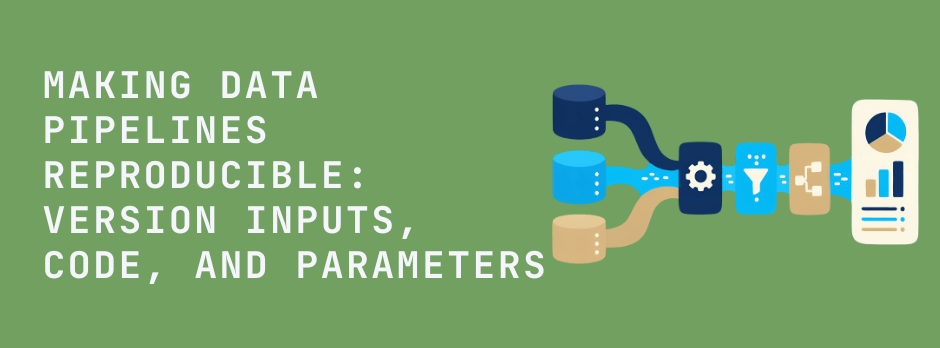
Making Data Pipelines Reproducible: Version Inputs, Code, and Parameters
When a pipeline produces an unexpected result, the first questions are usually simple: Which data did it read? Which code ran? What parameters were used? If the answers are scattered across logs, shell history, and mutable object paths, reproducing the run becomes guesswork.

Verifying Assumptions of Multiple Linear Regression
When we run regression, we hope to be able to generalize the sample model to the entire population. To do so we have to meet several assumptions of the multiple linear regression model. If we are violating these assumptions it stops our generalizing conclusions to our target population because the results might be biased or misleading, so what are the assumptions ? how do we check them ?

Handling Categorical Features with SciKitLearn
After dealing with missing data in your dataset. You will most likely face Categorical Features in numerous datasets. In the majority of cases, these features tend to be non-numerical and thus need to be converted to be processed in machine learning algorithms.

Handling missing data with SciKit SimpleImputer
When working on data science projects, it’s very likely that you’ll be encountering missing data in your columns. It’s not ideal to disregard or take out all the rows containing missing data for any project. Other columns for the same row where the data is missing can be critical for the data preparation state, so it’ll be wiser to infer or find a way to fill in the missing values in our dataset for a better outcome.