

A model can score exceptionally well in a notebook and still fail on genuinely new data. One common reason is data leakage: information that would not be available at prediction time has influenced training or evaluation.
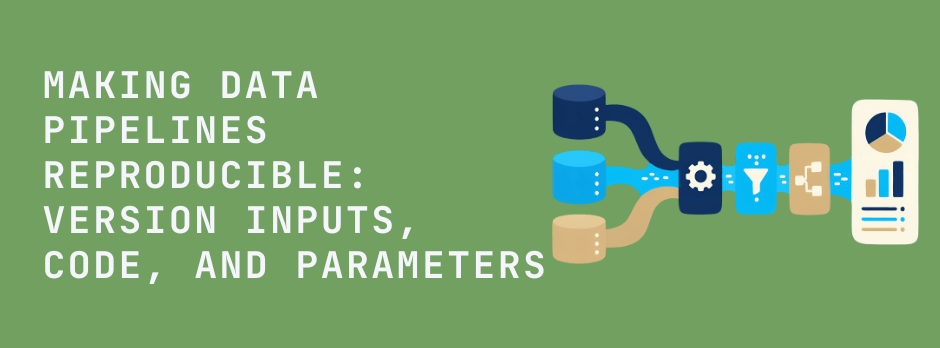
Making Data Pipelines Reproducible: Version Inputs, Code, and Parameters
When a pipeline produces an unexpected result, the first questions are usually simple: Which data did it read? Which code ran? What parameters were used? If the answers are scattered across logs, shell history, and mutable object paths, reproducing the run becomes guesswork.

AWS IAM Roles for Automation: A Practical Least-Privilege Design
Automation makes cloud operations faster, but it also lets a mistake repeat at machine speed. A deployment job with broad permissions can change far more than the application it was meant to release. A script using a long-lived access key can keep working long after its original purpose has ended.

AWS Cost Alerts Are Not a Kill Switch: Designing a Runaway-Workload Containment Loop
A cost alert can tell you that estimated AWS spend crossed a threshold. It may not tell you quickly enough to stop a workload that is creating billable usage right now.

Mastering Bioinformatics Pipeline Automation: From Scripts to Cloud-Native Workflows
Introduction
In the rapidly evolving field of bioinformatics, the ability to transform research scripts into robust, scalable, and reproducible workflows is becoming increasingly critical. This article explores the journey of converting a simple Python script into a production-ready Nextflow workflow optimized for cloud execution environments like AWS HealthOmics.

Level-Up Your Landing Zone: Upgrading AWS Control Tower to v3.3 & Using the New Enabled Controls API for Continuous Gap Analysis
The AWS Control Tower team has been shipping features at a blistering pace this year. Two stand-outs landed in May 2025:
- Centralized “Enabled Controls” view in the console, a one-stop dashboard that lists every preventive, detective, and proactive control you’ve switched on across all OUs and accounts. Amazon Web Services, Inc.
- 233 new AWS Config-backed controls plus automatic baseline-drift reporting to surface deviations from best practice as they happen. docs.aws.amazon.com

Getting the most value from AWS spot instances
One way to reduce cloud provisioning costs on Amazon Web Services (AWS) is by using spot instances. Spot instances are spare compute capacity on AWS that is available at a discounted price. By using spot instances, you can access the same types of EC2 instances as on-demand instances, but at a lower cost.

Deploy a Custom Provider with Terraform
Creating and deploying a custom provider with Terraform is a relatively simple process, but it can be time-consuming if you’re new to the platform. In this tutorial, we’ll walk through the steps necessary to create and deploy a custom provider, as well as discuss some of the more advanced features and techniques that you can use to make your provider more powerful and effective.

Building Serverless Architectures with the Messaging Fanout Pattern and Amazon SNS
Serverless architectures are becoming increasingly popular as businesses seek to take advantage of the scalability, flexibility, and cost-efficiency of the cloud. One key design pattern for serverless architectures is the messaging fanout pattern, which can be implemented using Amazon Simple Notification Service (SNS).

Designing and Implementing Cloud Architectures
The rise of cloud computing has fundamentally changed the way businesses and organizations operate, providing access to scalable and flexible computing resources on demand. As a result, designing and implementing effective cloud architectures has become a critical skill for IT professionals. In this article, we will explore the key principles and best practices for designing and implementing cloud architectures, with a focus on popular cloud providers such as Amazon Web Services (AWS), Microsoft Azure, and Google Cloud Platform. We will also discuss the challenges and considerations involved in migrating to the cloud, and provide guidance for building robust and secure cloud architectures that can support your organization’s needs.